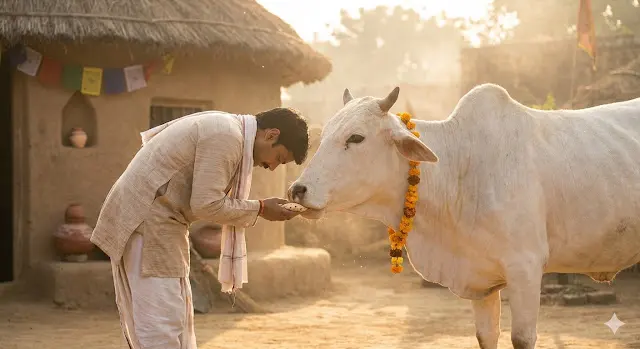
The tradition of gau sewa is the soul of India
 Surbhi Sewa·
In the Sanatan culture born of that soul, the Indian cow is held to be a living symbol of purity, motherhood and abundance. For this reason the shastras grant her the highest station of a mother. By Sanatan belief, thirty-three koti devas dwell within Gau Mata, which is why her form is held to be not merely worldly but divine.
Panchagavya (milk, curd, ghee, cow urine and cow dung) carries a very particular importance in Sanatan Dharma, religious, spiritual and medicinal alike. Panchagavya has long been used widely in yajna, in worship, in purification and in Ayurvedic tradition. The Vedas, the Puranas and the Upanishads are filled with the glory of Gau Mata and describe her as a foundation stone of dharma.
The Rig Veda, Mandala 8, Sukta 101, Mantra 15 gives Gau Mata a very high place. There she is called the mother of the Rudras, the daughter of the Vasus, the sister of the Adityas and the seat of amrita, and her slaughter is plainly forbidden. This is not a religious command alone; it is a Vedic message of compassion and of the protection of life.
In the Shrimad Bhagavad Gita, Chapter 10, Verse 28, Bhagwan Shri Krishna says himself: "Among cows I am Kamadhenu." These words reveal in full the divine and benevolent form of Gau Mata.
Service to Gau Mata opens the way to physical health, peace of mind, emotional balance, financial steadiness and spiritual growth. It is therefore our moral and religious duty to serve her with devotion in our gaushalas, using modern and improved means, bringing reverence, science and compassion together.
To protect and serve Gau Mata is not merely the keeping of a tradition. It is the protection of Sanatan culture and of the future of the generations to come.
Originally published: surbhi-sewa.blogspot.com