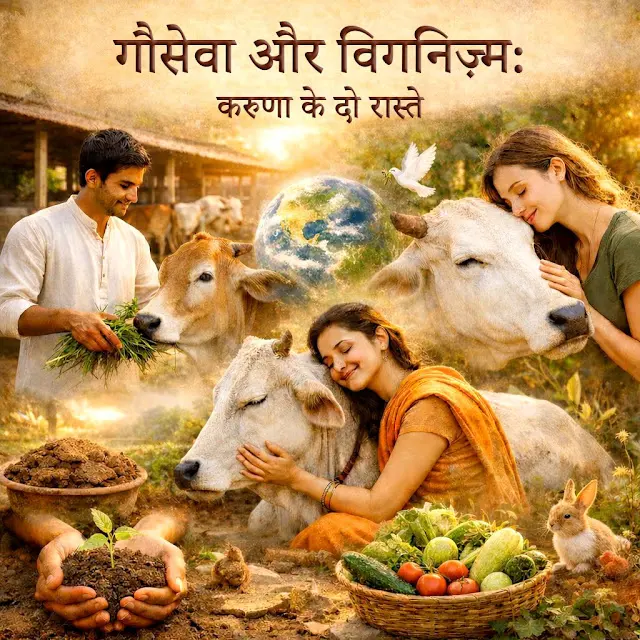
Gau Sewa and veganism: two paths of compassion
 Surbhi Sewa·
In today's fast urban life, and with veganism growing, many young people are moving away from milk and animal-based products. The feeling behind this is not a negative one. It is compassion, sensitivity and the search for a healthy life. That thinking deserves respect. But seen through an Indian lens, the root spirit of gau sewa is relationship, not exploitation. The cow is not merely an animal that gives milk. She is a living ecosystem: her dung gives life to the soil, her traditional uses are tied to environmental balance, and her calm presence steadies both the mind and the surroundings. In the Indian tradition, taking milk was never held to be a right; it was held to be a responsibility. Taking milk is proper only when the cow is safe, respected and protected. This is coexistence, not trade. The vegan view says: "do no harm to nature." The Sanatan view says: "connect with nature, and protect it." The goal of both is one: non-violence, balance and a sensitive way of life. The difference is only in the way of seeing, not in the purpose. Not every young person today can keep a cow, and that is simply the reality. But helping a gaushala, adopting cow-based and environmentally sound products, and thinking about responsibility before consuming: that is modern gau sewa. Gau sewa today is not only a religious act. It is a conscious responsibility towards the earth, towards life and towards the future. Less consumption, more responsibility: that is the modern meaning of compassion.
Originally published: surbhi-sewa.blogspot.com